National Business Crime Reduction Partnership (BCRP) Awareness Week 2026
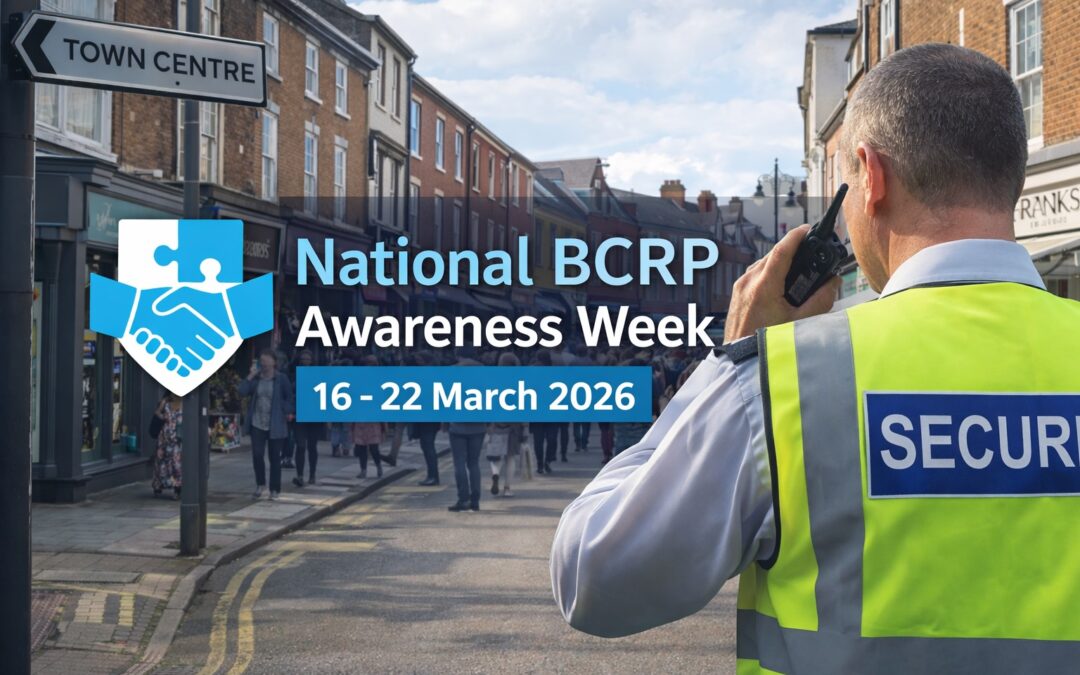
National Business Crime Reduction Partnership (BCRP) Awareness Week 2026 runs from 16 to 22 March 2026 and it is designed to shine a light on the practical, day to day work that Business Crime Reduction Partnerships (BCRPs) do to reduce retail crime and antisocial behaviour (ASB) in town centres and high streets.
It matters because the scale and impact of business crime is no longer a “background issue” for retailers and hospitality venues, it affects staff wellbeing, customer experience, and the confidence people feel when they visit a place to shop, eat, or spend time. National figures underline why partnerships and prevention matter: the Office for National Statistics reported that police recorded 516,971 shoplifting offences in England and Wales in the year ending December 2024, up 20% on the previous year and the highest level since current recording practices began.
At the same time, the British Retail Consortium has highlighted the growing financial and operational burden on the sector, with the total cost of retail crime and prevention reported at £4.2 billion, including £2.2 billion attributed to customer theft. Against that backdrop, BCRPs exist to help local businesses work together and work smarter with statutory partners, rather than trying to tackle these problems in isolation.
So what is a BCRP in plain English? It is a subscription based, business led, not for profit partnership that works with the police and the local authority to tackle crime and disorder affecting businesses and the wider community. In practice, that can mean information sharing about repeat offenders, coordinated approaches to banning orders and exclusions where appropriate, shared training and guidance for frontline teams, and a consistent local channel for reporting issues and building an evidence picture that supports enforcement. The key point is that it is not simply “more security”, it is structured partnership working that helps everyone respond more consistently and more quickly, while also improving prevention and staff confidence.
The national awareness week itself is relatively new. 2025 was the first year of a dedicated National BCRP Awareness Week, launched to raise the profile of BCRPs and the results they deliver, and to encourage more businesses to engage with local schemes. Coverage from last year put the emphasis on showcasing how BCRPs reduce crime and ASB through collaboration, and on helping businesses understand what joining or supporting a partnership actually looks like.
The week is also linked to the wider national push for stronger local action on retail crime and the protection of shopworkers, with government and industry sources increasingly pointing to partnership working, reporting consistency, and prevention measures as part of the solution. During awareness week, you can expect a mix of activity depending on the area, but typically it includes partner briefings, updates from local police teams, practical guidance for businesses, case studies of what has worked, and messages that encourage respectful behaviour towards staff.
You may also see BCRPs and BIDs highlighting tools such as incident reporting platforms, shared radio schemes, exclusion processes, conflict management training, and campaigns that promote safer, kinder town centres. For businesses, the value of a week like this is not just “awareness”, it is a prompt to review the basics and tighten up what already works. That might mean making sure staff know how to report incidents properly and consistently, reviewing store processes that reduce opportunities for theft without creating a hostile feel for genuine customers, refreshing de-escalation guidance, and ensuring teams know when and how to call for support. It is also a good moment to focus on the broader picture, because antisocial behaviour is not always a single dramatic incident, it can be persistent low level behaviour that gradually chips away at staff morale and customer confidence.
BCRPs help create shared standards and shared expectations, so that businesses are not left to decide alone what to tolerate and how to respond. Importantly, awareness week messaging should not imply that all customers are a problem, or that town centres are unsafe by default. Most people are doing the right thing, and most visits to shops and venues are positive. The aim is to support the people who are serving the public every day, reduce harm, and make it easier for local areas to respond effectively when problems do arise.
Looking ahead to 16 to 22 March 2026, the opportunity is to make the week genuinely useful rather than purely promotional. A good approach is to focus on a small number of practical themes that matter to local businesses, for example reporting and evidence, staff confidence and welfare, consistent communication channels, and the shared goal of a welcoming town centre. It can also be a helpful time for businesses who are not currently involved in a local partnership to find out what is available, what it costs, what support they would receive, and how quickly they can see benefit.
The National Association of Business Crime Partnerships (NABCP), which supports the BCRP landscape across the UK, positions its mission around reducing crime, disorder and ASB against businesses, staff, and customers, which is exactly the kind of collective focus that a national week is intended to reinforce. If you are writing about the week locally, it is worth balancing three messages: first, that business crime and ASB are real issues with real impact; second, that most people who come into town are there for a positive reason and are part of what makes the place thrive; and third, that partnerships are about practical solutions, joined up working, and supporting staff, not about blame or scaremongering.
Done well, National BCRP Awareness Week 2026 becomes a timely reminder that safer town centres are built through cooperation, consistent reporting, and shared standards, and that when businesses, police, councils, and local organisations work together, it is far easier to reduce repeat issues and protect the experience for everyone.